University of Liverpool

Veterinary World 11th
420+
The City of Art and Music
2.500 - 50% GBP

#165

# 160
The University of Liverpool is a member of the Russell Group and is located in Liverpool, United Kingdom. It is one of the "redbrick" universities, established in six industrialized cities in England during the Victorian era and granted university status before World War II. The university has won eight Nobel Prizes and currently offers 230 undergraduate degrees in 103 different fields.
The university, which excels particularly in the fields of Medicine and Health Sciences, Engineering and Computer Science, Veterinary Medicine, Business and Natural Sciences, and Social Sciences, is home to approximately 27 students.


The University of Liverpool has shown a significant rise in global university rankings as of 2025. Its achievements, both in overall rankings and in specific academic fields, reinforce its strong position in global education and research.
According to the QS World University Ranking 2025, it is ranked 165th, and according to the Times Higher Education World University Ranking 2025, it is ranked 160th. In UK-wide rankings, it is ranked 19th in the Complete University Guide 2025.
The University of Liverpool operates from a single main campus located in the Brownlow Hill and Mount Pleasant areas, approximately a 5-minute walk from Liverpool city centre. The campus covers 100 acres and comprises 192 non-lecture buildings, including 69 lecture halls, 114 teaching spaces, and various research facilities.


The University of Liverpool has produced successful individuals in many fields since its founding in 1881. Its renowned alumni include scientists, artists, politicians, and leading figures in the business world.
First, Sir Ronald Ross, winner of the 1902 Nobel Prize in Medicine, and Sir James Chadwick, winner of the 1935 Nobel Prize in Physics, catch our eye. Later, Philip Clarke, CEO of Tesco PLC, and James Quincey, CEO of The Coca-Cola Company, also appear as graduates of the University of Liverpool.

james quincey
James Robert B. Quincey is a British businessman residing in the United States. After beginning his career at Bain & Co., he joined The Coca-Cola Company in 1996 and was subsequently appointed chief operating officer. He became CEO in 2017 and chairman of the board in 2019.

Sir James Chadwick
Sir James Chadwick was a British nuclear physicist who received the Nobel Prize in Physics in 1935 for his discovery of the neutron. In 1941, he wrote the final draft of the MAUD Report, which encouraged the US government to begin serious research efforts on the atomic bomb.
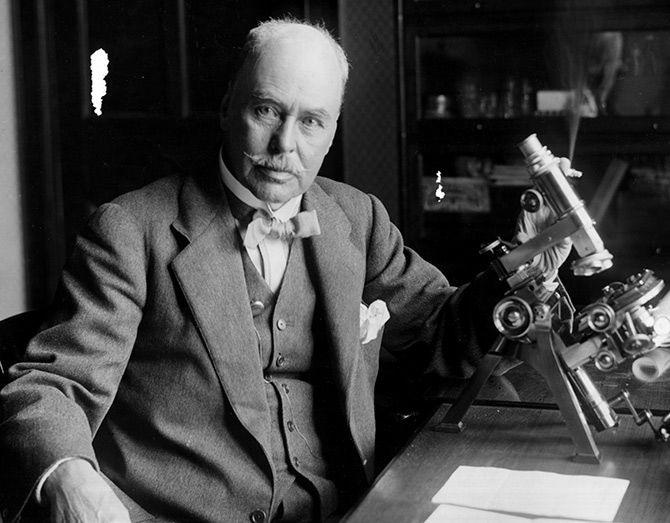
Sir Ronald Ross
Sir Ronald Ross KCB KCMG FRS FRCS was a British medical doctor who received the Nobel Prize in Physiology or Medicine in 1902 for his work on the transmission of malaria, becoming the first British Nobel laureate and the first person born outside of Europe to win the award.
In the UK, undergraduate programs last 3 years, while postgraduate programs last 1 year. Students on student visas are allowed to work 20 hours per week.
Diploma
Turkish High School Diploma. If available, International Baccalaureate (IB) or A-Level Diploma (if not, please contact EDUKAS consultants).
English
English Proficiency Certificate (Required: A sufficient score on internationally recognized IELTS UKVI or TOEFL exams) – Minimum IELTS 6.0 for undergraduate studies; minimum IELTS 6.5 for postgraduate studies.
Passport
You will not need a passport during the application process, but you must have a valid passport for at least 6 months prior to the start of the visa process.
transcript
Transcript (Transcripts must be in English; the EDUKAS team offers a free translation service)
Cv
The document should contain answers to the questions that EDUKAS consultants will ask you and should be prepared in a sample format.
Letter of Intent & Letter of Reference
The letter of intent should answer the questions posed by EDUKAS consultants and should be prepared according to the sample format. A letter of reference, a document from your professors or employer regarding your academic or professional background, is required during the application process.
University of Liverpool International Foundation Program
This is a university preparation program designed to improve your English level and academic skills, helping you transition to undergraduate studies. If you do not meet the admission requirements for direct entry into undergraduate studies, Foundation If you are successful in this program, you are guaranteed the opportunity to begin the first year of your undergraduate program the following year.
The University of Liverpool collaborates with Kaplan International Pathways for its International Foundation programs. After entering your personal information and uploading the required documents, you can complete your application by choosing one of four "Pathways" that will prepare you for your desired undergraduate program. These "Pathways" are as follows:
- Health, Life & Biosciences
- STEM & Natural Sciences
International Foundation Program | Starting date | Period Duration | 2025/2026 |
|---|---|---|---|
Business, Law and Social Sciences Pathway |
- |
- |
- |
Science and Engineering Pathway |
- |
- |
- |
To get information about the fees and duration of these programs,
You can visit the site.
University of Liverpool Undergraduate Programs
The program lasts a total of 6 semesters, 2 semesters per year. Undergraduate programs begin in September.
University of Liverpool Master's Programs
The program lasts one academic year and consists of two semesters. Master's programs begin in September.
University of Liverpool Pre-Sessional
For students who meet the program requirements but do not have a sufficient IELTS score, the University of Liverpool offers 6, 10, 20, 30, and 40-week online or in-person Pre-Sessional programs. With the support of these programs, students can improve their IELTS scores by 0.5, 1.0, or 1.5 points.
Pre-Sessional Courses | Starting date | 2025/2026 |
|---|---|---|
Pre-Sessional English - 40 weeks |
£20,400 | |
Pre-Sessional English - 30 weeks |
January 5, 2026 |
£15,300 |
Pre-Sessional English - 20 weeks |
April 7 2026 |
£10,800 |
Pre-Sessional English - 10 weeks (Online) |
July 6, 2026 |
£5,560 |
Pre-Sessional English - 10 weeks Online (Autumn) |
£5,560 | |
Pre-Sessional English - 10 weeks Online (Summer) |
June 8, 2026 |
£5,560 |
Pre-Sessional English – 6 weeks |
August 3, 2026 |
£3,528 |
University of Liverpool Pre-Master's Program
- Business, Economics and Finance
- Law and Social Services
- Science and Engineering
Pre-Master's Programme | Starting date | Period Duration | 2025/2026 |
|---|---|---|---|
Business, Economics and FinancePathway |
- |
- |
- |
Law and Social Services Pathway |
- |
- |
- |
Science and Engineering |
- |
- |
- |
To get information about the fees and duration of these programs,
You can visit the site.

University of Liverpool Scholarships | Starting date | Type of Education | Scholarship Amount | Application Req. |
|---|---|---|---|---|
Postgraduate Global Advancement Scholarships - Course |
September 2026 |
Postgraduate Taught/Master |
£5.000 |
You must enroll in a suitable master's program starting in September 2025. Pay your tuition deposit by the stated deadline. |
Liverpool Excellence Scholarship for Undergraduate |
January 2026 |
License |
£7.500 |
This scholarship is for international students and is valid for the first year of tuition. You must be accepted into a suitable undergraduate program at the University of Liverpool for the 2026/2027 academic year. The scholarship is automatically provided by the University. |
Liverpool Excellence Scholarship for Postgraduate |
January 2026 |
Postgraduate Taught/Master |
£7.000 |
You must have completed your undergraduate studies with first-class honors or an equivalent degree. You must be enrolled in a full-time or part-time Master's program at the University of Liverpool for the 2026/2027 academic year. You must confirm your offer of acceptance and pay the tuition deposit by the announced deadline. No application is required; the scholarship will be awarded automatically. |
For detailed information on application requirements and scholarships, you can get support from EDUKAS consultants.
The cost of living in London can vary depending on accommodation and location. The average rent for a shared apartment, excluding bills, is at least £1,000, making it the most popular type of accommodation among students. Adding living expenses, you should have an average monthly budget of around £1,500.


Expenditure Type | Weekly Cost | Monthly Cost |
|---|---|---|
On-campus accommodation (shared bathroom, en-suite or studio) |
It ranges between £173,25 and £265,93. |
It ranges between £693 and £1,063. |
Staying in an off-campus shared house. |
£100 (average) |
£400 (average) |
One-time bus ticket (student) |
£2 |
- |
Weekly train ticket (student) |
It ranges between £19,80 and £40. |
- |
Dining on campus |
It ranges from £3 to £5 per meal. |
- |
University of Liverpool gym membership |
- |
£22.99 |

To study in the United Kingdom, you need to apply for a Student Visa. EDUKAS is here to support you throughout the entire application process.
CAS Letter
Universities send acceptance letters called CAS (Course of Availability) to students for use in the visa application process. You can request your CAS letter from the school through your EDUKAS consultant.
Bank account statement
The school and accommodation fees must be deposited in your current account or your sponsor's current account at your bank for 28 consecutive days prior to your visa interview appointment. (Accommodation costs in London are £12,006, and outside London £9,207, as determined by the visa department.) You can find out the exact amount from your consultant when it's time for the visa process.
Passport
You will need a passport that is valid for at least 6 months.
Identity register copy
If your mother or father will be financially sponsoring you for your education, you can easily obtain a certified copy of your birth certificate through the e-government system to prove their relationship.
Diploma & Transcript
The most up-to-date versions of these documents, as stated in your CAS document, are uploaded electronically during the visa application process.
Consent form for students under 18 years of age
Students under the age of 18 who are about to begin their education in England can obtain this document, confirming their parental permission, with the assistance of a notary.
Sponsorship Letter
If the student's education and living expenses are covered by the parents, a petition proving this must be provided, or if the student receives a scholarship from an institution (such as YLSY), a document from the institution proving this must be obtained.
Edukas is with you.
The translation of required documents and completion of forms for the visa application will be done with the assistance of your EDUKAS consultant.
Your advisor will inform you if any additional documents are required for your visa application.
The length of your stay depends on the length of your study program.
– If your program lasts 6 months or less, about 1 week.
– If your program lasts longer than 6 months, up to 1 month.
You can enter the United Kingdom in advance.
You will also need to pay a "Healthcare Fee" as part of your visa application. The amount you will pay depends on the duration of your visa.
– The UK government allows international students studying on a student visa to work. You can work while studying.
– You are entitled to work part-time for 20 hours per week during your undergraduate or postgraduate studies, and full-time during holidays.




































EDUKAS is just a step away from you.

Istanbul Office
(European Side)
Şişli - Istanbul
Phone: + 90 212 401 41 90
E-mail: [email protected]
Istanbul Office
(Anatolian Side)
Phone: + 90 216 408 22 20
E-mail: [email protected]
Ankara Office
Phone: + 90 312 465 04 64
E-mail: [email protected]
Izmir Office
Phone: + 90 232 422 05 56
E-mail: [email protected]
London Office
Phone: +44 7774 998404
E-mail: [email protected]