University College London (UCL)

Ranked #1 in the world in Education and Training.
960+
Campus Life in London
N/A

#9

# 22
University College London (UCL), founded in 1826, is one of the world's most prestigious universities, renowned for its long history and research-focused approach. A member of the Russell Group, UCL offers over 400 undergraduate programs in fields ranging from engineering and law to medicine and social sciences, and is distinguished by its pioneering research in its fields.
Located in the heart of London, UCL offers students a rich experience not only academically but also culturally and professionally. Its proximity to major institutions such as the British Museum, Tate Modern, and the British Library provides easy access to cultural life; and the internship and career opportunities London offers give students a strong advantage after graduation.
With students from over 150 countries, UCL boasts a highly international structure and supports social life with more than 450 student clubs. Through its sustainability efforts, award-winning alumni, and strong alumni network, UCL offers students an inspiring learning environment, both for today and the future.

University College London (UCL) is ranked 9th worldwide according to the QS World University Rankings 2025., It is among the top 10 universities in the United Kingdom. Since 2010, it has consistently been ranked among the top 10 universities in the world in the QS rankings.
According to the Research Excellence Framework (REF) 2021 results, UCL ranks 2nd in the UK in terms of research power. It has also reinforced its leadership in sustainability, ranking 1st in the UK and 5th globally in the QS Sustainability Rankings 2025.
UCL also stands out in the field of education. Ranked #1 in the world in architecture and the built environment. UCL is located in [location]. Selected as University of the Year in 2024 by The Times and The Sunday Times Good University Guide, UCL was awarded this title for its multidisciplinary research, sustainability efforts, and innovative campus, UCL East.
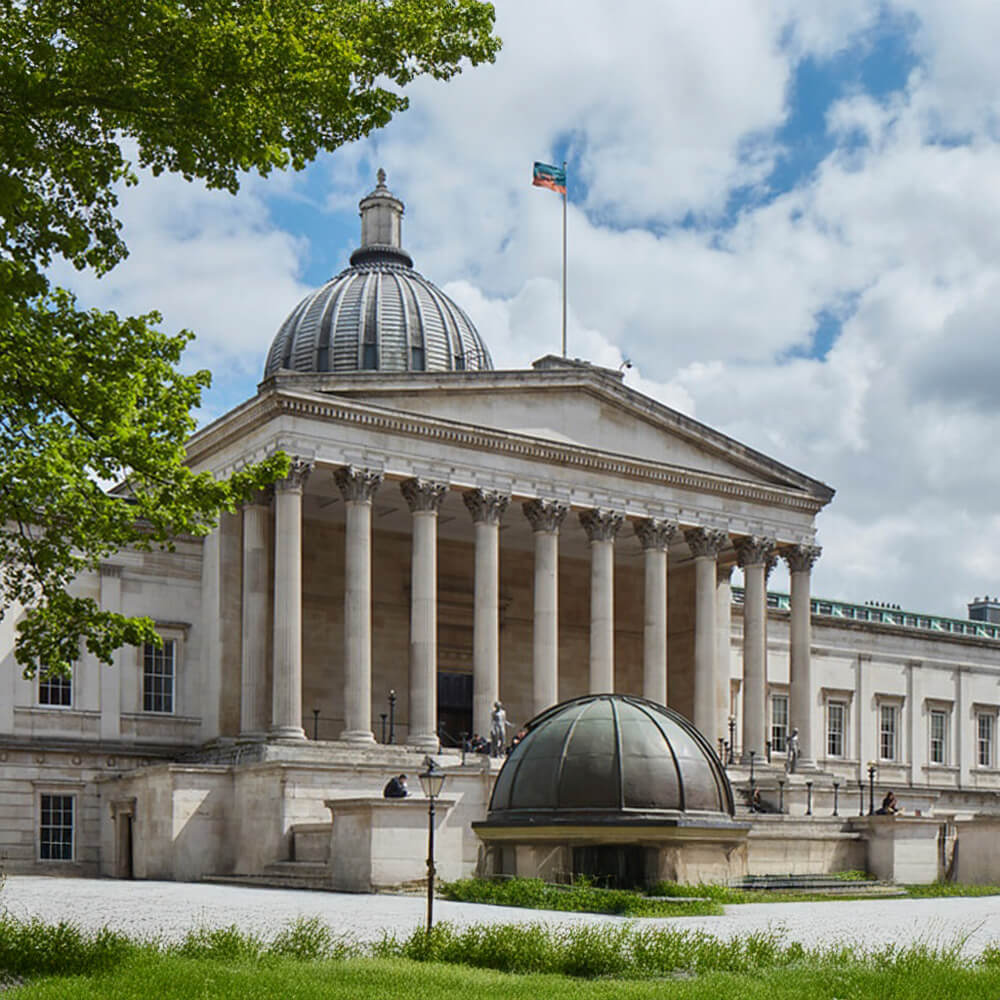
University College London (UCL) has two main campuses in London, the capital of England, located in Bloomsbury and Stratford in East London. The historic Bloomsbury campus is notable for its central location and iconic Wilkins Building, while the modernly designed UCL East offers innovative teaching and research spaces.
UCL's campus infrastructure, comprising over 200 buildings, houses approximately 65.000 students and staff. Its physical environment, developed with a focus on inclusivity and sustainability, aims to meet the social and academic needs of students. The university aims to achieve net-zero carbon emissions by 2030.
Libraries, museums, art galleries, and study areas on campuses support academic achievement, while theaters, gyms, and social spaces allow students to lead active lives. Furthermore, London, where UCL is located, has been named the world's best student city by QS, projected to be by 2025.


University College London has produced many successful alumni who are recognized worldwide. These alumni have become leading figures in numerous fields, including art, science, politics, sports, and technology. Nobel laureate Francis Crick is known for being part of the team that discovered the structure of DNA, while Alexander Graham Bell is remembered as the inventor of the telephone.
UCL has also left its mark on the world of cinema. Famous director Christopher Nolan and producer Emma Thomas are among UCL alumni. Comedian Ricky Gervais and artist Rachel Whiteread, known as the first woman to win a Turner Prize, are also among its graduates. Former Japanese Prime Minister Junichiro Koizumi and Olympic champion athlete Christine Ohuruogu are also UCL alumni.
This extensive and impressive alumni network reflects UCL's global impact and its commitment to multidisciplinary education.

Christopher Nolan
Sir Christopher Edward Nolan is a British and American film producer. Known for his Hollywood blockbuster films with complex storytelling, Nolan is considered one of the leading filmmakers of the 21st century. Nolan's films have grossed over $6,6 billion worldwide, making him the seventh highest-grossing film director.

Alexander Graham Bell
Alexander Graham Bell was a Scottish-born Canadian-American inventor, scientist, and engineer who patented the first practical telephone. He also founded the American Telephone and Telegraph Company in 1885.

Francis Crick
Francis Harry Compton Crick OM FRS was a British molecular biologist, biophysicist, and neuroscientist. He, along with James Watson, Rosalind Franklin, and Maurice Wilkins, played significant roles in deciphering the helical structure of the DNA molecule.
In the UK, undergraduate programs last 3 years, while postgraduate programs last 1 year. Students on student visas are allowed to work 20 hours per week.
Diploma
Turkish High School Diploma. If available, International Baccalaureate (IB) or A-Level Diploma (if not, please contact EDUKAS consultants).
English
English Proficiency Certificate (Required: A sufficient score on internationally recognized IELTS UKVI or TOEFL exams) – Minimum IELTS 6.0 for undergraduate studies; minimum IELTS 6.5 for postgraduate studies.
Passport
You will not need a passport during the application process, but you must have a valid passport for at least 6 months prior to the start of the visa process.
transcript
Transcript (Transcripts must be in English; the EDUKAS team offers a free translation service)
Cv
The document should contain answers to the questions that EDUKAS consultants will ask you and should be prepared in a sample format.
Letter of Intent & Letter of Reference
The letter of intent should answer the questions posed by EDUKAS consultants and should be prepared according to the sample format. A letter of reference, a document from your professors or employer regarding your academic or professional background, is required during the application process.
University College London (UCL) Foundation Program – Undergraduate Preparatory Certificates (UPC)
UCL's UPC (Undergraduate Preparatory Certificate) programs are one-year preparatory programs designed for international students who do not have sufficient academic qualifications for direct admission to undergraduate programs. UCL offers this program entirely on its own campus, with its own academic staff.
The aim of the program is to improve students' academic English level as well as their subject knowledge relevant to their chosen undergraduate program. The program is conducted face-to-face at UCL's main campus. Successful students gain the opportunity to transfer to UCL and other leading UK universities.
UCL Foundation Program | 2025/2026 |
|---|---|
UPCH (Humanities): Arts, Humanities, Social Sciences, Law, Economics, Business, etc. UPCSE (Science & Engineering): Engineering, Mathematics, Life Sciences, Physics, etc. (Students wishing to study Architecture can apply to the program through either route.) |
£27,000 |
UPCH/UPCSE for Architecture |
£28,500 |
UCL Undergraduate Programs
University College London (UCL) undergraduate programs typically last three years, with three terms per academic year. These programs, taught in English, begin each September.
University College London (UCL) – International Pre-Master's (IPM) Program
UCL's International Pre-Master's (IPM) program, high undergraduate education This is a preparatory course specifically designed for international students who wish to take the program. The program duration is fixed. 9 months It lasts for approximately 3 seasons. It starts every year in September and ends in the following summer.
The IPM programme aims to enhance students' academic qualifications, improve their English language skills to an advanced level, and prepare them for postgraduate studies at prestigious universities in the UK.
UCL Pre-Masters | 2025/2026 |
|---|---|
Architecture and Urban Design |
£20,450 |
Business, Economics, Management and Finance |
£20,450 |
Education and Psychology |
£20,450 |
Humanities, Social Sciences and Political Sciences |
£20,450 |
Law |
£20,450 |
Life and Medical Sciences |
£20,450 |
Science, Technology, Engineering and Mathematics (STEM) |
£20,450 |
University College London (UCL) Master's Programmes
UCL master's programs are generally 1 academic year. It continues. The programs start in September. It starts in January for some departments and faculties. An initial start date in January is also available. However, these January start dates are not valid for all departments; they are only offered in certain programs. Master's programs generally consist of 2 semesters; some programs may also include a project or thesis study during the summer term.
University College London (UCL) Pre-Sessional English Courses
If, after being accepted to a UCL postgraduate or undergraduate program, your English level does not meet the required criteria, you can attend pre-sessional English courses to improve your academic English.
These courses are designed to prepare you for academic studies at UCL with your English language proficiency. Course duration varies depending on your level and program, but generally ranges from 6 to 10 weeks.
Presessional English Courses | Starting date | 2025/2026 |
|---|---|---|
Extended Course - 10 weeks (Postgraduate Taught/Master Programmes) |
9 June |
£8,075 |
Standard Course – 7 weeks (Postgraduate Taught/Master Programmes) |
30 June |
£7,450 |
Pre-Sessional English - 7 weeks (Undergraduate) |
30 June |
£7,450 |

Global Master's Scholarship
Education Level: Postgraduate Taught/Master
Application deadline: May 8 2025
This scholarship is awarded to international students for full-time master's studies at UCL and applies as a priority towards tuition fees of £15,000 (for one year; for two-year programmes, this can be split 50/50 over two years).
Global Undergraduate Scholarship
Education Level: License
Application deadline: April 28, 2025 – to be updated on April 4, 2026 for 2026.
This scholarship supports low-income international students in covering the full cost of their full-time undergraduate studies at UCL and will be awarded to a total of 33 students.
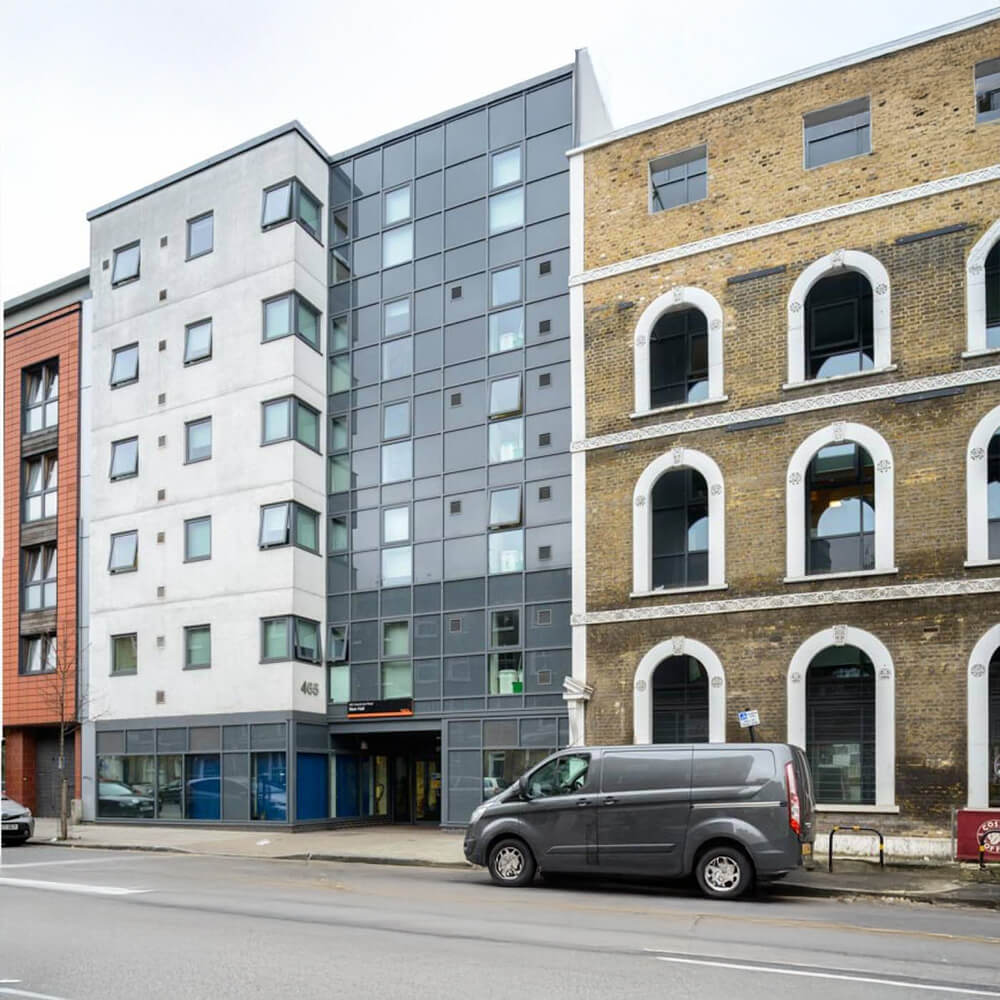
The cost of living in London varies depending on the type of accommodation and the area. For University College London (UCL) students, the average monthly rent for a room in shared houses, excluding utilities, is around £993, making it one of the most popular accommodation options. Studio apartments average around £1,016. Weekly fees for UCL halls of residence range from approximately £149.80 to £452.00. Adding in living expenses, it is recommended that UCL students in London have an average monthly budget of around £1.200 – £1.600.


Expenditure Type | Weekly Cost | Monthly Cost |
|---|---|---|
On-campus accommodation (shared bathroom, en-suite or studio) |
It ranges between £149.80 and £452.00. |
It ranges between £599,2 and £1,808. |
Staying in an off-campus shared house. |
£234 (average) |
£1,016 (average) |
Weekly bus ticket (student) |
£29.80 |
- |
Lunch on campus |
It ranges between £2.50 and £15. |
- |
Grab and go coffee on campus |
It ranges between £1.50 and £3.95. |
- |
Annual TV license (one-time only) |
£169 |
- |

To study in the United Kingdom, you need to apply for a Student Visa. EDUKAS is here to support you throughout the entire application process.
CAS Letter
Universities send acceptance letters called CAS (Course of Availability) to students for use in the visa application process. You can request your CAS letter from the school through your EDUKAS consultant.
Bank account statement
The school and accommodation fees must be deposited in your current account or your sponsor's current account at your bank for 28 consecutive days prior to your visa interview appointment. (Accommodation costs in London are £12,006, and outside London £9,207, as determined by the visa department.) You can find out the exact amount from your consultant when it's time for the visa process.
Passport
You will need a passport that is valid for at least 6 months.
Identity register copy
If your mother or father will be financially sponsoring you for your education, you can easily obtain a certified copy of your birth certificate through the e-government system to prove their relationship.
Diploma & Transcript
The most up-to-date versions of these documents, as stated in your CAS document, are uploaded electronically during the visa application process.
Consent form for students under 18 years of age
Students under the age of 18 who are about to begin their education in England can obtain this document, confirming their parental permission, with the assistance of a notary.
Sponsorship Letter
If the student's education and living expenses are covered by the parents, a petition proving this must be provided, or if the student receives a scholarship from an institution (such as YLSY), a document from the institution proving this must be obtained.
Edukas is with you.
The translation of required documents and completion of forms for the visa application will be done with the assistance of your EDUKAS consultant.
Your advisor will inform you if any additional documents are required for your visa application.
The length of your stay depends on the length of your study program.
– If your program lasts 6 months or less, about 1 week.
– If your program lasts longer than 6 months, up to 1 month.
You can enter the United Kingdom in advance.
You will also need to pay a "Healthcare Fee" as part of your visa application. The amount you will pay depends on the duration of your visa.
– The UK government allows international students studying on a student visa to work. You can work while studying.
– You are entitled to work part-time for 20 hours per week during your undergraduate or postgraduate studies, and full-time during holidays.








































EDUKAS is just a step away from you.

Istanbul Office
(European Side)
Şişli - Istanbul
Phone: + 90 212 401 41 90
E-mail: [email protected]
Istanbul Office
(Anatolian Side)
Phone: + 90 216 408 22 20
E-mail: [email protected]
Ankara Office
Phone: + 90 312 465 04 64
E-mail: [email protected]
Izmir Office
Phone: + 90 232 422 05 56
E-mail: [email protected]
London Office
Phone: +44 7774 998404
E-mail: [email protected]